
Moving computeto orbit
Vertically manufactured micro data centers


Deployed in 3 months
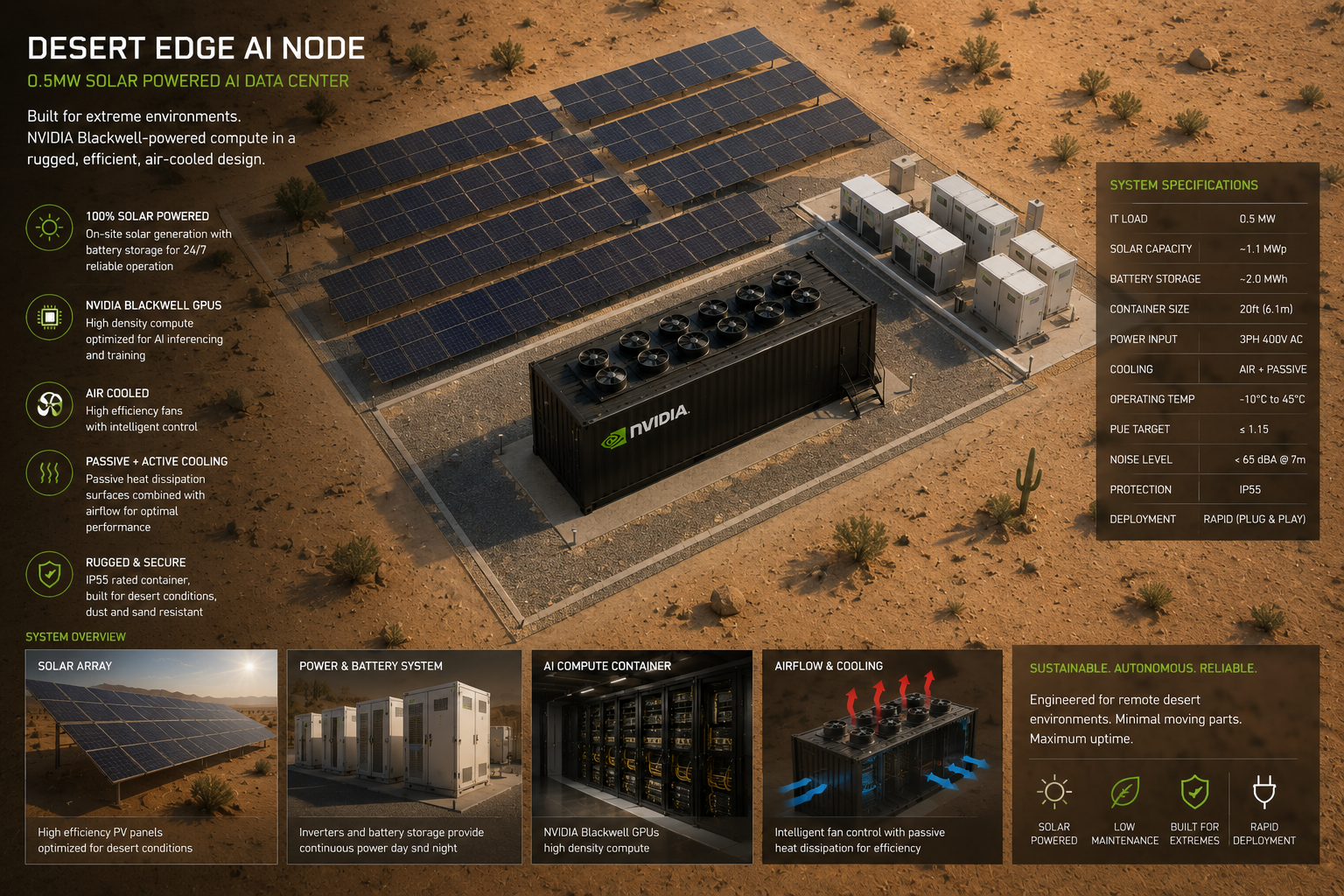
GW-scale data center projects slip five to seven years, or get cancelled. A Pacific pod lands on desert dirt and runs in ninety days.
$39B by 2035
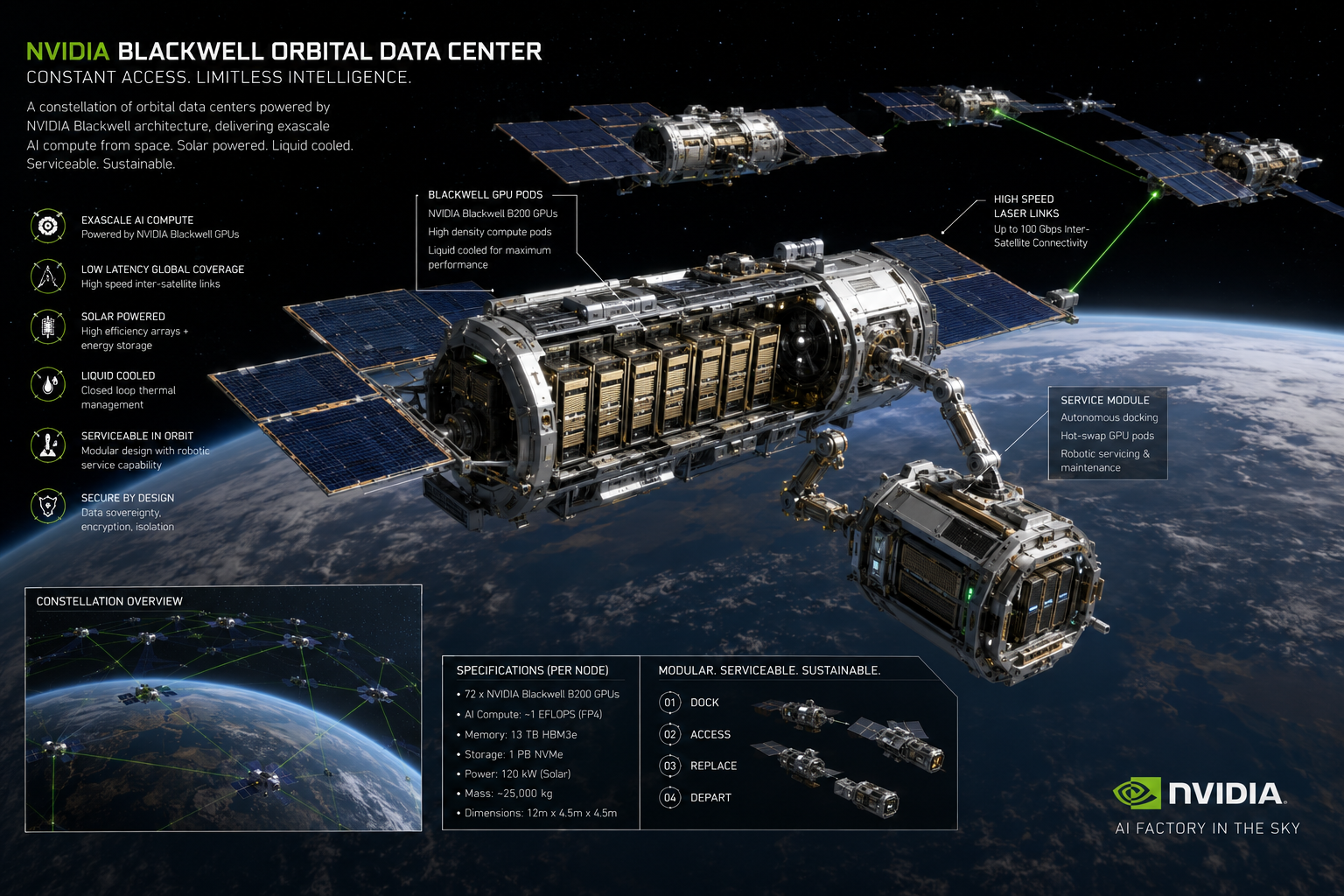
The projected orbital data center market. Every pod we ship to the desert today is a proof point for the same production line that ships pods to orbit next.
Pacific builds mass-produced, solar-powered data centers that go to the desert today, and to orbit next
Pacific builds solar-powered, waterless, autonomous GPU pods in the American desert, live in months on land with no grid queue and no water rights. Each pod is an orbital data center minus the rocket: same physics, same production line, proven and paid for by Earth customers today. Our founders built satellites and Mars rovers at the European Space Agency.
Compute follows energy, and energy’s endgame is space
Orbital data centers are a $39B market by 2035, and cooling is the blocker. The same hot-radiator physics that lets a satellite survive vacuum also runs a data center without water in the desert. We build them on Earth first using the vertical supply chain that got SpaceX to orbit. Each desert pod funds the production line that ships pods to orbit next.
How we get there
Nova
Our internal AI-powered systems engineering platform. It combines frontier language models with the knowledge of skilled experts to manage hard problems across aerospace, hardware, and government. Nova is the backbone that lets a small team ship a factory-produced data center.
Manufacturing
One factory, one design, no market risk. We are building a vertical supply chain the way SpaceX did: standardised pods off a production line, not one-off megaprojects. Every pod ships the same way, and every pod makes the next one cheaper.
Hardware
Solar-powered, waterless, autonomous GPU pods designed to survive the desert, and, later, orbit. Same hot-radiator physics either way. Our founding team built satellites and Mars rovers at the European Space Agency, and the pods carry that DNA.
There are two trillion galaxies in the observable universe, each containing hundreds of billions of stars, and of the thousands of planets we’ve discovered, not one has shown a single sign of life. Earth holds an estimated 8.7 million complex species, coral reefs that took half a million years to grow, rainforests that regulate the climate of the entire planet, and deep ocean ecosystems we still haven’t mapped. Nothing like it has ever been found anywhere else. Yet we are about to burn the next decade of it powering the machines that will decide what human civilisation looks like.
Pacific builds the mass-produced, solar-powered data centers that give civilisation a way out. Desert today, orbit next, sun all the way. The solar system has everything civilisation needs. Earth is the only place that’s alive. We intend to keep it that way.